Two Coaches. Two Businesses. One Community They Couldn’t Walk Away From.
There is something SSA does that I don’t think we talk about enough.
Maybe because it’s hard to explain from the outside. Or maybe because the people inside it are so busy actually doing the work that nobody stops to describe it.
It’s called Community Coaching. And here is what makes it different from every coaching arrangement you’ve probably seen anywhere else.
SSA’s community coaches are not recruited from outside. No credential search, no rate card, no open application. They are SSA members, people who joined because they wanted to get better at speaking, who showed up week after week, did the reps alongside everyone else, and at some point received a call from Cathey Armillas and Marc Williams that went something like: we see what you bring to this room. We think other people should get to learn from you.
You can’t apply for it.
You can’t fast-track it.
The invitation is earned in the room, over time, and it does not go to everyone.
Each community coach completes SSA’s Community Coaching certification program, developed by Cathey and Marc, which trains members to coach in the SSA method. They don’t stop being members when they become coaches. They are still in the room. Still doing the work. Still getting the feedback. Just also holding the room for everyone else.
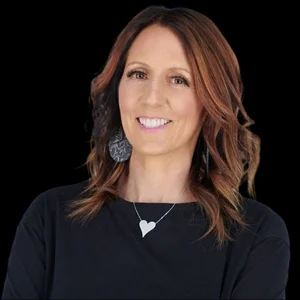
SSA has six community coaches right now. I sat down with two of them: Teresa Younkin and Alexina Atin Shaber. I wanted to know who they are outside of SSA, what brought them in as members, and what made them say yes to the coaching invitation when it came.
Here’s what they told me.
A conversation with Teresa Younkin
Teresa Younkin is CEO and Co-Founder of Mosaic Life Tech, a healthcare AI governance advisory firm that helps executives build board-visible frameworks they can defend before they need them. She brings 20+ years of health IT and federal program experience, an MSHI credential, and HL7 Da Vinci contributor work to her practice. At SSA, she coaches Talk Structure, Openings & Closings, and Audience Psychology. Her coaching motto: “When you know your structure, you’re free to be spontaneous.”
Rose: Your company is called Mosaic Life Tech. For someone who has never heard the words “healthcare AI governance” used in a sentence, what does your work actually look like?
Teresa: Healthcare organizations are making decisions that touch patient care, and increasingly those decisions are influenced by AI. When a clinical pathway or an operational system uses AI to shape an outcome, someone has to be accountable when something goes wrong. Most organizations don’t have a clear answer for who that is, or how they would defend it to their board, or what they’d do if a regulator asked a hard question. We help them build that clarity before they need it: the governance frameworks, the evidence trail, the board visibility. Before a problem surfaces, not after.
Rose: What brought you to SSA?
Teresa: I communicate for a living. I translate complex technical concepts for executives, boards, and regulators. But explaining is not the same as landing. I wasn’t always landing. A colleague sent me the link to an Open Session and I thought I’d sit in and observe. I did not observe. I was in the drills inside twenty minutes. I didn’t stop coming back after that.
Rose: When Cathey and Marc invited you to become a community coach, what actually happened?
Teresa: I was surprised. They said they saw the way I think about structure in my own speaking and thought I could help other people build that same foundation. I remember holding two thoughts at the same time: do I have capacity for this? And could I actually say no? The answer to the second question made the first one irrelevant.
Rose: You coach talk structure. People hear that word and immediately think straitjacket. What do you tell them?
Teresa: Structure is not a straitjacket. It is a floor. When you know where the ground is, you can stop spending mental energy on not falling and redirect it to where you actually want to go. The speakers who struggle most with spontaneity, with adapting in the moment, with being present when something changes, are almost always speakers who haven’t done the structural work yet. They’re improvising at the level of the architecture, and that is exhausting to sustain. Get the structure right and spontaneity becomes available. That is what I coach.
A conversation with Alexina Atin Shaber
Alexina Atin Shaber is the founder of Luminaries Speaking Consultancy, where she coaches leaders on voice, influence, and the kind of communication that actually connects. She came to SSA with fifteen years of branding and communications experience at agencies including Wieden+Kennedy and TBWA, plus Apple Marcom, and found something she hadn’t found anywhere else. At SSA, she coaches Inclusive Communication, Empowerment, Voice Equity, and Courage. Her coaching philosophy: “The world needs your story. Don’t wait for permission to tell it.”
Rose: Tell me about Luminaries.
Alexina: It started from a belief I’ve held for a long time: most people have more to say than the world has let them say. Luminaries is a speaking consultancy. I work with leaders, executives, and people with something real to contribute who haven’t always been given the tools or the space or the permission to lead with their own voice. One-on-one coaching, keynote development, workshops for teams who want to actually communicate and not merely perform communicating. There is a difference. Most people feel it the moment you name it.
Rose: You have fifteen years of professional communications experience. You’ve built things for some of the most recognized brands in the world. Why did you need SSA?
Alexina: That is exactly the question I asked myself. The honest answer is that I had the theory but I wasn’t doing the reps. SSA is a place where you practice. Every week, with real people in real time giving you real feedback. There is nowhere to hide, and that is the whole point. I came in thinking I would sharpen a few edges. I found out I had more to sharpen than I had admitted to myself. That is not a humiliation. That is a gift. Knowing what you still have to work on is a gift.
Rose: When Cathey and Marc invited you to coach, what happened?
Alexina: I was genuinely moved by it. Because SSA is not something you participate in from a distance. It holds you the way communities are supposed to hold you. When Cathey and Marc asked me to coach here, they were asking me to give something back to something I’m still inside of. That felt significant to me. Yes was the only answer that made sense. I want to be one of the people who holds this thing up.
Rose: Voice equity. You use that term. Break it down for me.
Alexina: Voice equity is the recognition that not everyone starts in the same place when they walk into a room. Some people were raised knowing their voice was welcome. Some people were raised learning to wait, to defer, to make themselves smaller. The goal of what I do is not to teach everyone the same style or flatten everyone into the same presence. It is to make sure that everyone who walks into a room has what they actually need to be fully heard. On their own terms, not someone else’s. Conviction with clarity, voice with purpose, and enough courage to take up the space that was always theirsto begin with.
Come see the coaches in action
The SSA session schedule is where the full calendar lives. Teresa coaches Talk Structure, Openings & Closings, and Audience Psychology. Alexina brings Inclusive Communication, Empowerment, and her signature Voice Equity work. Both of them show up in the room, the coaching room and the member room, every week.
If you’re already a member, the rooms are there and already waiting for you.
If you haven’t been in a room yet, the Open Session is the door in.
It is free and monthly. Real coaches, real feedback, real practice. No membership is required.
Most people forget to be nervous faster than they expected. That is not an accident. It is what happens when the room is actually in it with you.
Rose Kaz is SSA’s Community Tech Wizard and co-founder of Business 4 Good. Meeht the Founders →
Keep Reading
I built a con artist into one of my favorite stories on purpose. AI could never write that line. It only works because it’s true.
Mindset Keep the HI in AI: Why Human Intelligence Still WinsWhy AI writing sounds the same, what human intelligence does that AI cannot, and 3 ways to keep your voice yours.
Coaching Why the Best Speakers Know When to Stop TalkingThere is a moment in every speaker’s life where they realize they have said a lot and meant very little. That is the moment this drill was built for.
Looking for older articles? Browse the Full Archive
There is something SSA does that I don’t think we talk about enough.
Maybe because it’s hard to explain from the outside. Or maybe because the people inside it are so busy actually doing the work that nobody stops to describe it.
It’s called Community Coaching. And here is what makes it different from every coaching arrangement you’ve probably seen anywhere else.
SSA’s community coaches are not recruited from outside. No credential search, no rate card, no open application. They are SSA members — people who joined because they wanted to get better at speaking, who showed up week after week, did the reps alongside everyone else, and at some point received a call from Cathey Armillas and Marc Williams that went something like: we see what you bring to this room. We think other people should get to learn from you.
You can’t apply for it.
You can’t fast-track it.
The invitation is earned in the room, over time, and it does not go to everyone.
Each community coach completes SSA’s Community Coaching certification program, developed by Cathey and Marc, which trains members to coach in the SSA method. They don’t stop being members when they become coaches. They are still in the room. Still doing the work. Still getting the feedback. Just also holding the room for everyone else.
SSA has six community coaches right now. I sat down with two of them: Teresa Younkin and Alexina Atin Shaber. I wanted to know who they are outside of SSA, what brought them in as members, and what made them say yes to the coaching invitation when it came.
Here’s what they told me.
Teresa Younkin
Teresa Younkin is CEO and Co-Founder of Mosaic Life Tech, a healthcare AI governance advisory firm that helps executives build board-visible frameworks they can defend — before they need them. She brings 20+ years of health IT and federal program experience, an MSHI credential, and HL7 Da Vinci contributor work to her practice. At SSA, she coaches Talk Structure, Openings & Closings, and Audience Psychology. Her coaching motto: “When you know your structure, you’re free to be spontaneous.”
Rose: Your company is called Mosaic Life Tech. For someone who has never heard the words “healthcare AI governance” used in a sentence — what does your work actually look like?
Teresa: Healthcare organizations are making decisions that touch patient care, and increasingly those decisions are influenced by AI. When a clinical pathway or an operational system uses AI to shape an outcome, someone has to be accountable when something goes wrong. Most organizations don’t have a clear answer for who that is, or how they would defend it to their board, or what they’d do if a regulator asked a hard question. We help them build that clarity before they need it — the governance frameworks, the evidence trail, the board visibility. Not after a problem surfaces. Before.
Rose: What brought you to SSA?
Teresa: I communicate for a living. I translate complex technical concepts for executives, boards, and regulators. But explaining is not the same as landing. I wasn’t always landing. A colleague sent me the link to an Open Session and I thought I’d sit in and observe. I did not observe. I was in the drills inside twenty minutes. I didn’t stop coming back after that.
Rose: When Cathey and Marc invited you to become a community coach — what actually happened?
Teresa: I was surprised. They said they saw the way I think about structure in my own speaking and thought I could help other people build that same foundation. I remember holding two thoughts at the same time: do I have capacity for this? And could I actually say no? The answer to the second question made the first one irrelevant.
Rose: You coach talk structure. People hear that word and immediately think straitjacket. What do you tell them?
Teresa: Structure is not a straitjacket. It is a floor. When you know where the ground is, you can stop spending mental energy on not falling and redirect it to where you actually want to go. The speakers who struggle most with spontaneity — with adapting in the moment, with being present when something changes — are almost always speakers who haven’t done the structural work yet. They’re improvising at the level of the architecture. That is exhausting. Get the structure right and spontaneity becomes available. That is what I coach.
Alexina Atin Shaber
Alexina Atin Shaber is the founder of Luminaries Speaking Consultancy, where she coaches leaders on voice, influence, and the kind of communication that actually connects. She came to SSA with fifteen years of branding and communications experience — agencies including Wieden+Kennedy and TBWA, plus Apple Marcom — and found something she hadn’t found anywhere else. At SSA, she coaches Inclusive Communication, Empowerment, Voice Equity, and Courage. Her coaching philosophy: “The world needs your story. Don’t wait for permission to tell it.”
Rose: Tell me about Luminaries.
Alexina: It started from a belief I’ve held for a long time: most people have more to say than the world has let them say. Luminaries is a speaking consultancy. I work with leaders, executives, and people with something real to contribute who haven’t always been given the tools or the space or the permission to lead with their own voice. One-on-one coaching, keynote development, workshops for teams who want to actually communicate — not perform communicating. There is a difference. Most people feel it the moment you name it.
Rose: You have fifteen years of professional communications experience. You’ve built things for some of the most recognized brands in the world. Why did you need SSA?
Alexina: That is exactly the question I asked myself. The honest answer is that I had the theory but I wasn’t doing the reps. SSA is a place where you practice. Every week, with real people in real time giving you real feedback. There is nowhere to hide, and that is the whole point. I came in thinking I would sharpen a few edges. I found out I had more to sharpen than I had admitted to myself. That is not a humiliation — that is a gift. Knowing what you still have to work on is a gift.
Rose: When Cathey and Marc invited you to coach — what happened?
Alexina: I was moved. Genuinely. Because SSA is not something you participate in from a distance. It holds you the way communities are supposed to hold you. When Cathey and Marc asked me to coach here, they were asking me to give something back to something I’m still inside of. That felt significant to me. I thought — yes. I want to be one of the people who holds this thing up.
Rose: Voice equity. You use that term. Break it down for me.
Alexina: Voice equity is the recognition that not everyone starts in the same place when they walk into a room. Some people were raised knowing their voice was welcome. Some people were raised learning to wait, to defer, to make themselves smaller. The goal of what I do is not to teach everyone the same style or flatten everyone into the same presence — it is to make sure that everyone who walks into a room has what they actually need to be fully heard. On their own terms, not someone else’s. Conviction with clarity. Voice with purpose. And enough courage to take up the space that was always theirs to begin with.
Come See the Coaches in Action
The SSA session schedule is where the full calendar lives. Teresa coaches Talk Structure, Openings & Closings, and Audience Psychology. Alexina brings Inclusive Communication, Empowerment, and her signature Voice Equity work. Both of them show up in the room — the coaching room and the member room — every week.
If you’re already a member, the rooms are there. Already waiting.
If you haven’t been in a room yet, the Open Session is the door in.
Free. Monthly. Real coaches, real feedback, real practice. No membership required.
Most people forget to be nervous faster than they expected. That’s not an accident — it’s what happens when the room is actually in it with you.
Rose Kaz is SSA’s Community Tech Wizard and co-founder of Business 4 Good. Meet the Founders →
Keep Reading
I built a con artist into one of my favorite stories on purpose. AI could never write that line. It only works because it’s true.
Mindset Keep the HI in AI: Why Human Intelligence Still WinsWhy AI writing sounds the same, what human intelligence does that AI cannot, and 3 ways to keep your voice yours.
Coaching Why the Best Speakers Know When to Stop TalkingThere is a moment in every speaker’s life where they realize they have said a lot and meant very little. That is the moment this drill was built for.
Looking for older articles? Browse the Full Archive